Prescription Weight Loss Pills vs Natural Supplements: Access, Cost and Side Effects
Are prescription weight loss pills better than supplements?
For potency, yes: prescription weight loss pills produce larger, better-documented results because they are regulated medicines with clinical trial data. But better depends on the goal. For milder targets and daily maintenance, a natural supplement can be a reasonable, lower-risk, lower-cost fit that a prescription drug would over-serve.
- Prescription: more potent, trial-backed, but needs a doctor, costs more, and carries side effects.
- Natural/OTC: gentler and cheaper, no prescription, suited to milder goals and daily support.
- Deciding factor: the size of your goal and your medical situation — not the marketing.

The choice between prescription weight loss pills and natural over-the-counter supplements is one of the most-searched decisions in health for a reason: the two look like answers to the same question but are really answers to different questions. Prescription options are potent, regulated medicines that can produce large, well-documented results — and they come with a doctor, a cost, and a side-effect profile. Natural supplements are gentler, cheaper and freely available — and they deliver correspondingly smaller support. Getting this decision right is less about which is "better" in the abstract and more about which is matched to the size of your goal and the state of your health. This guide lays out the real trade-offs so you can tell which side of the line you belong on.
It's worth noting the search interest itself is shifting: demand for the phrase "prescription weight loss pills" runs to the tens of thousands of searches a month but has been gently declining as GLP-1 injections dominate the conversation. That churn is exactly why a clear-headed comparison matters more than a trend-chasing one — the categories, and their trade-offs, are more stable than the headlines.
What counts as a prescription weight loss pill
The prescription category spans a few types. There are the GLP-1 and dual-agonist injectables that get the headlines, and there are genuine pills — older appetite suppressants, fat-absorption blockers, and newer oral agents. What unites them isn't the delivery format but the regulatory status: they are medicines, approved on the strength of clinical trials, dispensed under a prescription, and monitored by a clinician who screens you for suitability first. That oversight is not bureaucratic friction for its own sake; it exists because effects large enough to matter come paired with risks large enough to need watching.
That trade is the whole logic of the category. You accept appointments, a prescription, medical supervision and, frequently, a substantial monthly cost, and in exchange you get access to interventions capable of producing double-digit percentage weight loss in trials — results no supplement can claim. If your situation genuinely calls for that scale of effect, the friction is the price of a tool that works at that level. The mistake is reaching for that tool, and paying its full price in money and side effects, for a goal that never needed it.
What natural weight loss supplements actually are
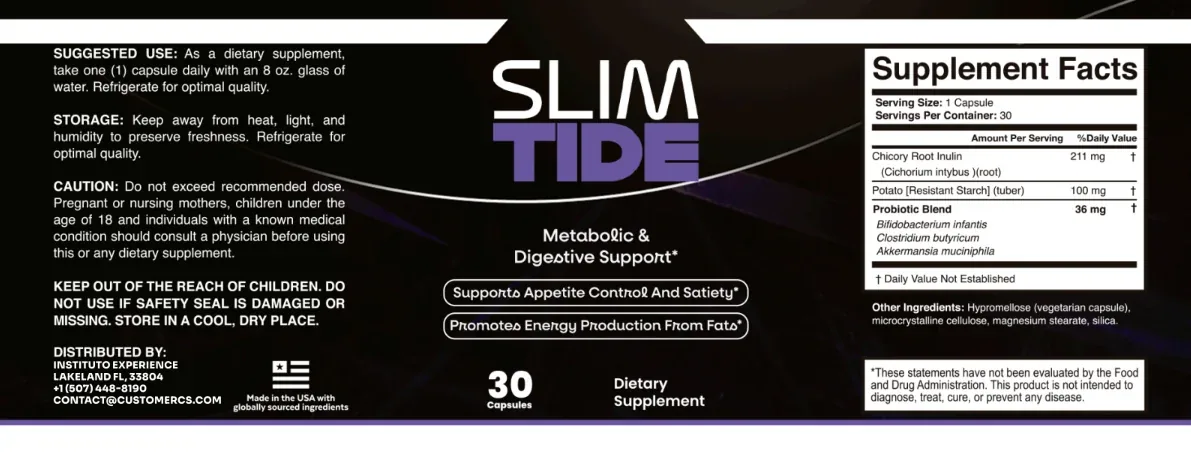
Natural supplements occupy the other end of the spectrum. They are not medicines; they are dietary products that supply ingredients — fibres, plant extracts, probiotics — intended to support normal bodily processes rather than override them pharmacologically. SlimTide is a representative example: a once-daily, stimulant-free capsule built around 211 mg of chicory root inulin, 100 mg of potato resistant starch and a 36 mg three-strain probiotic blend. The mechanism is real but gentle — fermentable fibre feeds gut bacteria that produce the body's own fullness-signalling compounds — and the effect is a supportive nudge, not a pharmacological lever.
That gentleness is the point, not a weakness to apologise for. A supplement in this lane asks almost nothing of you: no prescription, no appointment, a low daily cost, and a side-effect profile that at most involves some gas or bloating in the first week or two as your gut adjusts to the fibre. It suits people whose goal is modest — steadier appetite, fewer runaway cravings, gut comfort, gentle daily maintenance — and who want a sustainable habit rather than a medical intervention. Before you judge any product in this category, read its label against the marketing; our guide to questions to ask your doctor about supplements covers exactly what to scrutinise.

Access, cost and side effects, compared head-to-head
Here's the comparison that actually drives the decision. Read down the column that matches your situation, not the one with the bigger headline number.
| Factor | Prescription weight loss pills | Natural supplements (e.g. SlimTide) |
|---|---|---|
| Access | Doctor's prescription & screening required | Over the counter, no prescription |
| Potency | High; trial-documented, double-digit % possible | Gentle; supportive effect only |
| Cost | Often hundreds/month without insurance | Low daily cost, lower on bundles |
| Side effects | Nausea, GI upset, others; some serious risks screened for | Possible early gas/bloating; generally well tolerated |
| Supervision | Required & ongoing | Self-directed; clear with a doctor if on meds |
| Best fit | Larger goals, medical indication | Milder goals, daily maintenance |
The pattern is consistent: prescription options trade higher cost, more friction and more side effects for greater power, while natural supplements trade lower power for accessibility, affordability and gentleness. Neither column is "the winner" — the winner is whichever column matches your goal. And cost specifically deserves its own look, because the gap is large and easy to misread; we run those numbers in the SlimTide cost and value breakdown.
If your goal is on the milder end
If you don't need a prescription-scale intervention — you just want steadier appetite, fewer cravings and daily gut support — SlimTide is the low-friction, no-prescription place to start. One stimulant-free capsule a day, backed by a money-back guarantee so a fair test costs you attention, not risk. See current pricing and the full guarantee terms on the official store page.
See the Official SlimTide Offer
Affiliate link. We may earn a commission at no extra cost to you.
The side-effect question, taken seriously
Side effects are where the two categories diverge most sharply, and glossing over it would be dishonest in both directions. Prescription anti-obesity medications commonly cause gastrointestinal effects — nausea, vomiting, diarrhoea, constipation — especially the GLP-1 drugs, and while these often ease over time they're a real reason many people stop. Beyond the common effects there are rarer, more serious risks, which is precisely why a clinician screens your history first and monitors you afterwards. None of that makes these drugs bad; it makes them medicines, which is a category that requires respect and supervision.
Natural supplements sit at the gentle end, but "gentle" is not "consequence-free." Fermentable fibres can cause gas and bloating in the first weeks as your gut adapts, and any supplement can interact with your particular medications or conditions. The honest difference is one of magnitude and supervision: a supplement's downsides are usually mild and self-limiting, whereas a prescription drug's require professional management. If you're weighing either against your current medications, that's a conversation to have before you buy anything — our guide to what to ask a pharmacist before buying a supplement lays out the specific questions.
Three myths worth dismantling
Myth 1: "Natural means safer, so it's the smart default."
Natural often means gentler, but "natural" tells you nothing reliable about safety, dose or quality on its own — plenty of natural substances interact with drugs or are useless at the doses sold. The real safety advantage of a product like SlimTide is specific and modest: a well-characterised fibre-and-probiotic formula, transparently dosed, is low-risk for most healthy adults. That's an argument from the label, not from the adjective, and it's the argument you should demand from any supplement.
Myth 2: "Prescription pills are a shortcut that lets you skip the basics."
They aren't. Even the most potent medications work best alongside diet, movement and sleep, and prescribers pair them with lifestyle change for exactly that reason. The same is true, more so, for supplements: neither a drug nor a capsule creates an energy deficit you're actively eating past. The basics aren't the thing the pill lets you skip; they're the thing the pill is meant to assist.
Myth 3: "You have to pick one team and stay on it."
You don't. Plenty of people start with lifestyle change and a supportive supplement, and escalate to medical options only if their goal or health requires it — or use a supplement for daily maintenance after a course of something stronger. The categories aren't rival tribes; they're tools at different points on a ladder. Combining them, though, is a medical decision, never a self-serve one — which is the next point.
Can you combine them? Ask first.
This is the question that most needs a firm answer: combining a supplement with prescription weight-loss medication is a decision for your prescriber or pharmacist, not something to figure out from a blog. Fibre in particular can affect how some oral medications are absorbed if the two are taken at the same time, which is a solvable timing issue but a real one. Add in your personal history — other medications, existing conditions, pregnancy or nursing — and the only safe path is professional sign-off. The default rule of thumb is to space fibre well away from any medication and to clear anything new with someone who knows your full picture. If you take prescription drugs of any kind, treat that step as mandatory, not optional.
The right question isn't "which is better, prescription or natural?" It's "how big is my goal, what does my health require, and what's the least intervention that meets it?" Answer that, and the category picks itself.
So how should you choose?
Start with an honest read of your goal and your health. If you have a medical indication for weight loss, a large amount to lose, or a condition that a clinician should be managing, that's a prescription conversation — and no supplement page should talk you out of seeing a doctor. If your goal is milder — a stubborn ten or fifteen pounds, steadier appetite, fewer cravings, daily gut support — then a natural supplement is a reasonable, low-risk, low-cost first move, and prescription-scale tools would simply over-serve it. Many people run the gentle experiment first precisely because the downside is so small, escalating only if they need to. If you're specifically weighing a supplement against a GLP-1, our comparison of SlimTide as a natural alternative to Ozempic takes that exact matchup apart. Whatever you choose, choose it on the size of the job, not the size of the marketing.
General information, not medical advice. If you take prescription medication or manage a health condition, consult a doctor or pharmacist before starting any supplement or combining products. These statements have not been evaluated by the Food and Drug Administration, and no dietary supplement is intended to diagnose, treat, cure or prevent any disease.
Related reading
- SlimTide vs Ozempic: an honest look at a natural alternative
- The best weight loss pills of 2026, compared side by side
- SlimTide cost and value breakdown: per-bottle and per-day math
Common questions
Are prescription weight loss pills better than supplements?
For potency, yes: prescription weight loss pills produce larger, better-documented results because they are regulated medicines with clinical trial data. But better depends on the goal. For milder targets and daily maintenance, a natural supplement can be a reasonable, lower-risk, lower-cost fit that a prescription drug would over-serve.
Do I need a prescription for weight loss pills?
For the potent medications like GLP-1 drugs and other approved anti-obesity agents, yes, a prescription and clinician oversight are required. Over-the-counter dietary supplements such as SlimTide do not need a prescription, but they are a different, gentler category and are not substitutes for prescribed medicine.
Can I take a supplement with prescription weight loss meds?
Only after checking with your prescriber or pharmacist. Fibre can affect how some medications are absorbed if taken at the same time, and combining products is a medical decision that depends on your history. Space fibre away from medication and get professional sign-off before combining anything.
What are the downsides of prescription diet pills?
The main downsides are cost, access hurdles and side effects. They often require appointments and can be expensive without insurance, and gastrointestinal effects like nausea are common with GLP-1 medications. They also need medical supervision, and some carry more serious risks that a doctor screens for.
References and further reading
Affiliate link. Sliemtide Daily Brief earns a commission on purchases made through it, at no extra cost to you. We are not the manufacturer.